Postoperative instructions
Search by procedure or familiar terminology, then open the relevant recovery handout.
Browse instructions →Bringing specialized techniques in plastic, reconstructive, and hand surgery to Western Massachusetts. Thoughtful, individualized care focused on restoring function, supporting recovery, and improving quality of life.
Quick access to practical instructions and resources for patients, nurses, and resident physicians.
Search by procedure or familiar terminology, then open the relevant recovery handout.
Browse instructions →Reference documents and frequently used tools in one publicly accessible location.
Open resources →Offices in Springfield, Palmer, and Northampton. Call (413) 794-5363 for appointments and location-specific availability.
Call the office →For appointments and to confirm which office to visit, call (413) 794-5363.
2 Medical Center Dr, Suite 206
Springfield, MA 01107
40 Wright Street
Palmer, MA 01069
325B King St
Northampton, MA 01060
Plastic and Reconstructive Surgery – Hand Surgery
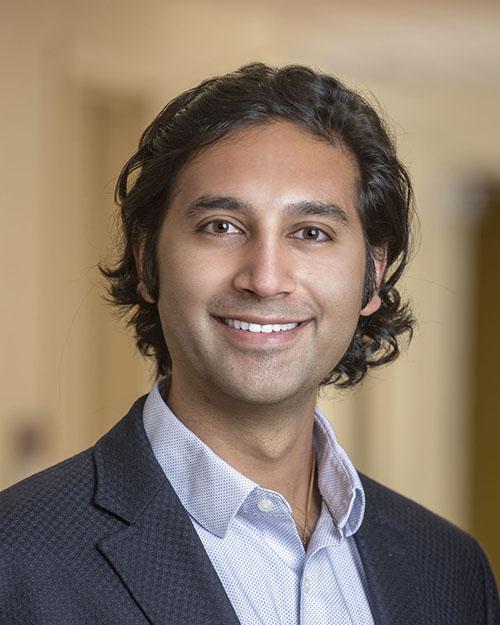
Dr. Naram is a board-certified plastic and reconstructive surgeon with additional fellowship training and subspecialty certification in surgery of the hand. His practice in Western Massachusetts brings together hand and wrist surgery, peripheral nerve surgery, breast reconstruction, and complex reconstructive procedures.
His work spans both frequently performed operations—including carpal tunnel release, trigger finger surgery, and fracture repair—and more complex reconstructive problems involving nerves, tendons, bone, and soft tissue. His training in plastic surgery informs an approach that considers tissue healing, function, and future treatment options together, rather than treating each problem in isolation.
Dr. Naram believes that the best treatment starts with a clear understanding of the diagnosis and the patient's priorities. Not every condition requires surgery. When an operation is appropriate, he works with patients to weigh the expected benefits, risks, alternatives, and recovery requirements.
American Board of Plastic Surgery certification in plastic surgery and subspecialty certification in surgery of the hand (CAQ). Fellow of the American College of Surgeons (FACS).
University of Texas Southwestern Medical Center, Dallas, Texas (2017–2018).
University of Massachusetts Medical School, Worcester, Massachusetts (2011–2017).
Rensselaer Polytechnic Institute / Albany Medical College combined-degree program; MD, Albany Medical College (2011).
Assistant Professor of Surgery, UMass Chan Medical School – Baystate Regional Campus.
Dr. Naram's clinical practice includes hand and wrist conditions, fractures and arthritis, tendon and nerve injuries, peripheral nerve reconstruction, breast reconstruction, and complex wound and limb reconstruction. His reconstructive experience includes microsurgical techniques and procedures designed to restore function after injury, disease, or prior surgery.
His combination of plastic surgery and hand surgery training is particularly relevant to problems that involve multiple tissue types or require a balance between mobility, stability, sensation, and durable soft-tissue coverage.
Dr. Naram serves as an Assistant Professor of Surgery at UMass Chan Medical School–Baystate and participates in resident education. His peer-reviewed publications include studies and technical reports concerning thumb carpometacarpal arthritis, tendon injuries, and targeted muscle reinnervation. The selected publications below provide examples of his scholarly work.
For a broader publication list, see Dr. Naram's UMass Chan faculty profile.
Dr. Naram sees patients in Springfield, with additional office locations in Palmer and Northampton. For scheduling and location availability, contact the practice at (413) 794-5363.
View practice locations →Find recovery guidance by procedure, body area, or common clinical term. Select a document to open the original PDF.
Frequently referenced documents and practical tools. Publicly accessible without an account.
Implant reference catalog, 2023 edition.
Find reference PDF →Published three-measurement model for estimating breast weight.
Open calculator →Estimate inframammary fold position using implant diameter, projection, and nipple-to-fold distance on maximal stretch.
Open ICE calculator →Search the document library for handouts and other reference files.
Search documents →Enter three measurements in centimeters for the right breast, left breast, or both. Leave all three fields on one side blank for unilateral calculations.
Formula: −231.66 + 0.5747 × SN² + 18.5478 × FFp + 14.5087 × FN. Result is an estimated breast weight in grams, not a direct volume measurement in mL. In the original validation study of 108 mastectomy specimens from 88 women (specimen weights 150–1,250 g), the expected absolute error was approximately 89.7 g and the expected relative error was 18.4%. Accuracy may differ outside the study population; use as an adjunct to clinical assessment. Longo et al., Plastic and Reconstructive Surgery (2013).
No measurements are transmitted to the website or stored.
Enter implant base width (diameter), projection, and nipple-to-existing-IMF distance on maximum stretch, all in centimeters. The calculation uses 55% of implant diameter for round implants.
Formula for round implants: I = 0.55 × W + P; E = I − C. A positive E indicates proposed IMF lowering below the existing fold; a negative E indicates that the calculated position lies above it, not a recommendation to raise the fold. The calculated nipple-to-new-IMF distance on stretch is I. This is an adjunct to surgeon assessment; assess fold integrity, skin envelope, implant selection, and risk of double-bubble deformity before using markings.
Source: Mallucci P, Branford OA. Design for Natural Breast Augmentation: The ICE Principle. Plast Reconstr Surg. 2016;137:1728–1737. Round-implant 55% implementation is described in subsequent comparative literature. No measurements are transmitted or stored.